
CoreWeave, a leading cloud infrastructure provider specializing in GPU-accelerated compute, has announced the deployment of NVIDIA’s cutting-edge H200 Tensor Core GPUs across its hyperscale data centers. This strategic upgrade positions CoreWeave to support the rapidly growing demand for large-scale generative AI workloads, enabling enterprises and research institutions to train and serve advanced foundation models faster, at greater scale, and with improved efficiency. The H200 GPU—built on NVIDIA’s Hopper architecture—offers significant performance improvements for transformer-based AI models, boasting enhanced throughput for both training and inference tasks. By integrating thousands of these accelerators into its fabric, CoreWeave delivers turnkey access to one of the most powerful generative AI platforms available, empowering customers to iterate on complex models, handle massive datasets, and deploy real-time AI services with confidence. As industries from finance to healthcare embrace generative AI, CoreWeave’s H200 infrastructure represents a critical enabler for innovation at scale.
The Evolution of GPU Computing for Generative AI
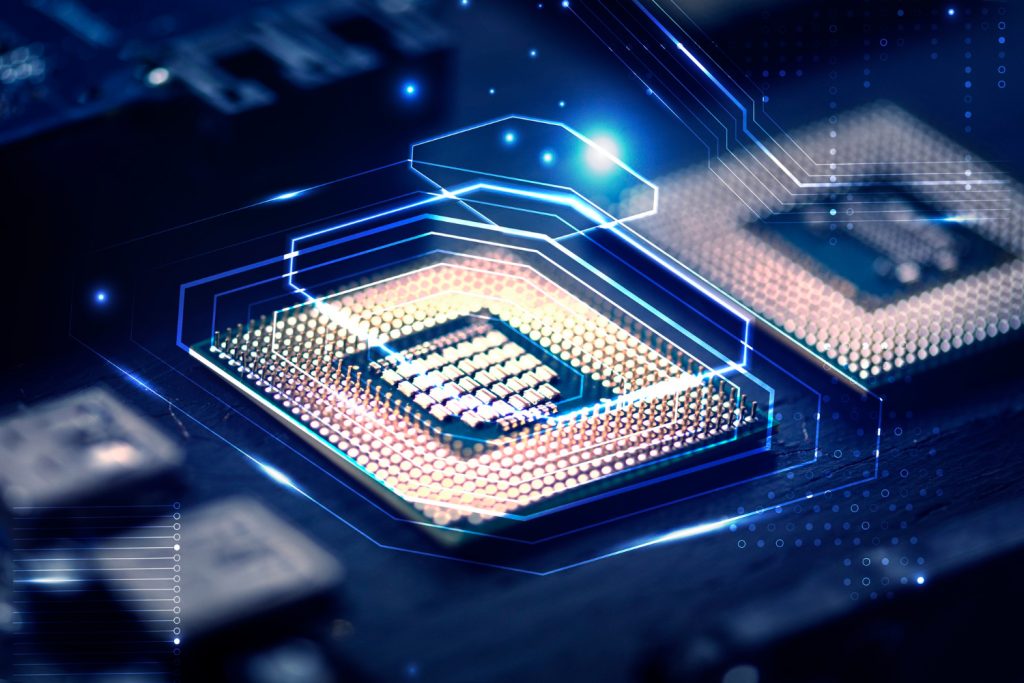
Over the last decade, GPU-based compute has evolved from a niche solution for graphics rendering into the foundational technology driving modern AI. Early deep-learning frameworks leveraged consumer-grade GPUs to accelerate training of convolutional neural networks, unlocking breakthroughs in image recognition and computer vision. As natural language processing and generative AI gained prominence, demands shifted toward transformer architectures requiring even greater matrix-multiply throughput and memory bandwidth. NVIDIA’s introduction of tensor cores and mixed-precision compute in the Volta and Ampere generations marked a significant leap, reducing training times for large language models from weeks to days. The H200, based on the Hopper architecture, pushes these capabilities further with next-generation tensor cores optimized for sparsity, greater on-chip high-bandwidth memory, and hardware support for transformer-specific operations. By deploying H200 GPUs at hyperscale, CoreWeave offers users a direct path to harness this raw compute power for training models with hundreds of billions of parameters and running inference pipelines that can serve thousands of tokens per second in production environments.
Technical Highlights of the NVIDIA H200 GPU
The NVIDIA H200 GPU introduces a suite of architectural enhancements tailored to generative AI. Key features include fourth-generation tensor cores supporting structural sparsity, enabling up to twice the effective throughput for matrix multiplications by pruning zero weights at the hardware level. The GPU incorporates stacked HBM3e memory providing terabytes-per-second of bandwidth, crucial for feeding data-hungry transformer layers without bottlenecks. Hopper’s new Transformer Engine dynamically combines FP8 and FP16 operations, maximizing both speed and numerical precision during training and inference. Programmable streaming multiprocessors with increased core counts and enhanced asynchronous compute allow overlapping of data transfers with computation to keep the pipeline saturated. Additionally, NVIDIA’s Multi-Instance GPU (MIG) technology partitions a single H200 into up to seven isolated instances, providing flexible resource allocation for multi-tenant workloads. By leveraging these features in its data centers, CoreWeave can offer clients significant reductions in per-token inference costs, faster turnaround for iterative model development, and more efficient utilization of GPU resources across diverse workload profiles.
CoreWeave’s Hyperscale Architecture and Service Portfolio
CoreWeave’s infrastructure is designed from the ground up to maximize the performance of GPU-focused tasks. Its hyperscale architecture interconnects racks of H200 GPUs via high-speed networking fabrics, ensuring low-latency communication for distributed training across hundreds or thousands of accelerators. The provider offers a fully managed AI platform—complete with optimized CUDA runtimes, containerized environments, and pre-configured frameworks such as PyTorch, TensorFlow, and NVIDIA’s NeMo Megatron. Customers can spin up elastic clusters for training large foundation models, run hyperparameter sweeps at scale, or deploy inference endpoints with autoscaling. CoreWeave’s service portfolio includes GPU on-demand instances, reserved capacity for predictable workloads, and spot instances for cost-sensitive batch jobs. Additionally, the platform integrates advanced data-management features like end-to-end data encryption, high-volume parallel storage, and direct peering with major cloud providers for hybrid deployments. By coupling these capabilities with the raw power of H200 GPUs, CoreWeave addresses the full lifecycle of generative AI development—from data preprocessing and model training to real-time inference and monitoring.
Industry Use Cases and Customer Impact
The deployment of H200 GPUs at scale unlocks a wide array of generative AI applications across industries. In finance, firms can train large language models to synthesize market research, generate trading strategies, and automate report generation with high throughput. Media and entertainment companies leverage generative models for content creation, video synthesis, and interactive storytelling, benefiting from accelerated turnaround times. Healthcare institutions use models trained on medical literature and anonymized patient data to draft clinical notes, suggest treatment plans, and assist in diagnostic imaging analysis. E-commerce platforms deploy recommendation engines powered by large transformers to personalize customer journeys in real time. Startups in the AI-as-a-service sector can bring generative chatbots, code assistants, and data-analysis tools to market faster by tapping CoreWeave’s H200 infrastructure without upfront capital investment. Across these scenarios, customers report up to 2× improvement in training throughput compared to previous-generation GPUs, and inference cost savings of 30–50 percent per 1,000 tokens, enabling economic deployment of large models in production.
Strategic Implications for AI Ecosystems and Partnerships
CoreWeave’s investment in NVIDIA H200 GPUs underscores the strategic importance of specialized cloud services within the AI ecosystem. By partnering closely with NVIDIA, CoreWeave ensures early access to the latest hardware innovations, co-optimizes software stacks for maximum performance, and aligns its roadmap with NVIDIA’s GPU-architecture evolution. This collaboration benefits startups and enterprises that prefer turnkey solutions over building in-house GPU clusters—freeing them to focus on model innovation rather than infrastructure management. Moreover, CoreWeave’s hyperscale offering complements major cloud hyperscalers, providing alternatives for workloads that benefit from GPU-only environments, more aggressive pricing, or regulatory compliance within specialized data centers. The market’s response to H200 availability at CoreWeave can influence broader industry trends, encouraging similar deployments by other specialized cloud providers and fostering competition that drives down AI-compute costs. As generative AI becomes a core component of software stacks, cloud offerings that integrate top-tier GPUs, optimized runtimes, and managed services will play a pivotal role in democratizing access to next-generation AI capabilities.
Future Outlook: Scaling Generative AI Beyond 2025

Looking ahead, CoreWeave’s H200 deployment is just the first step in a continuous cycle of innovation required to sustain generative AI growth. As model sizes expand into the trillions of parameters, future demands will drive adoption of upcoming architectures—such as NVIDIA Blackwell—and specialized accelerators for neural network training. CoreWeave plans to augment its H200 clusters with emerging technologies like in-network computing, optical interconnects, and disaggregated memory systems to further reduce communication overhead and scale AI training to exascale. On the software front, advancements in model-parallel frameworks, sparsity exploitation, and efficient fine-tuning techniques will multiply the effective capacity of each GPU. CoreWeave is also exploring integration of edge-to-cloud pipelines, enabling seamless offloading of inference tasks to peripheral devices for latency-sensitive applications. By continually adapting its infrastructure to the evolving landscape, CoreWeave aims to remain at the forefront of hyperscale AI compute, supporting customers from research prototypes to global deployment of generative AI services well beyond 2025.



Leave a Reply